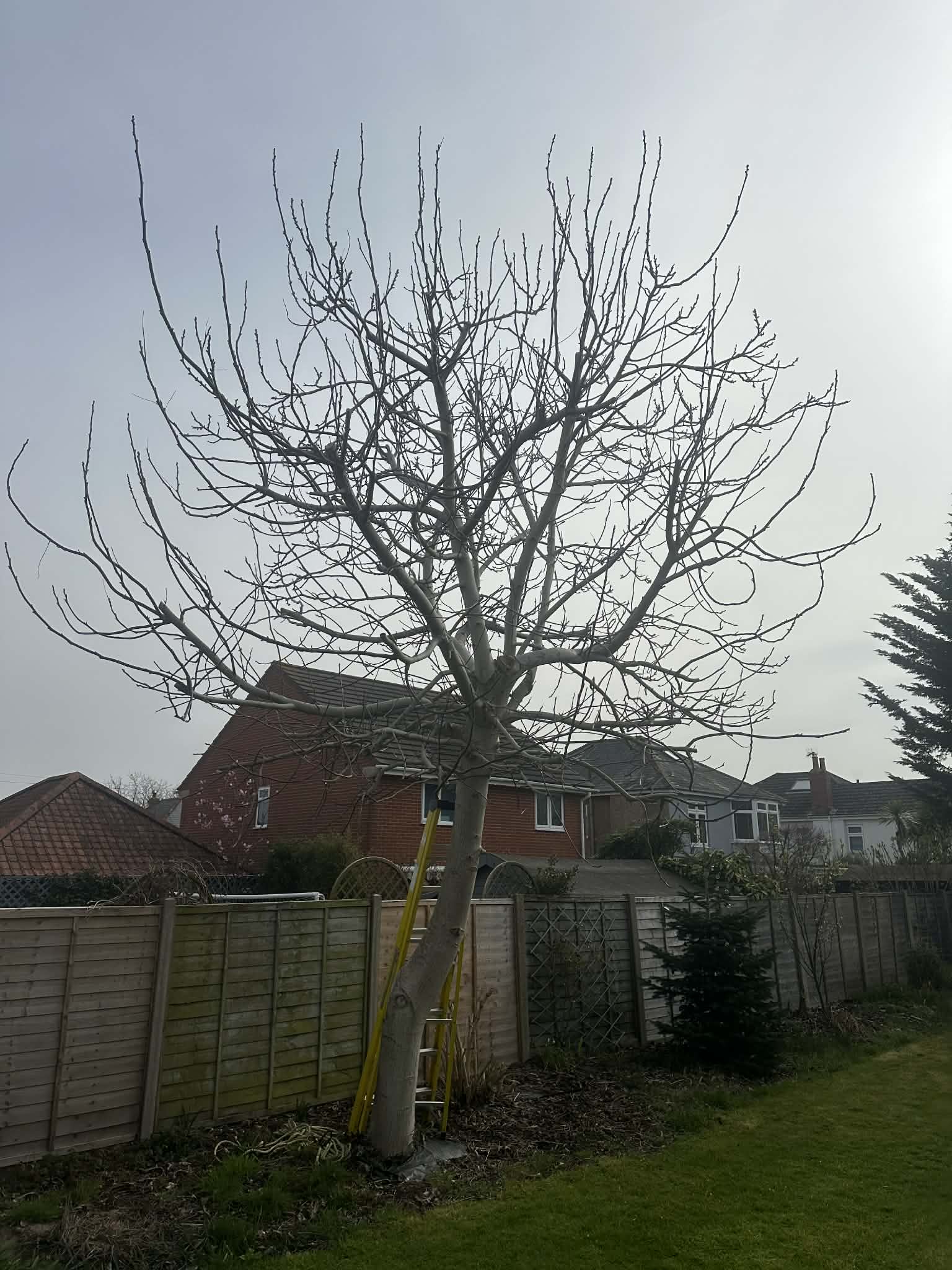
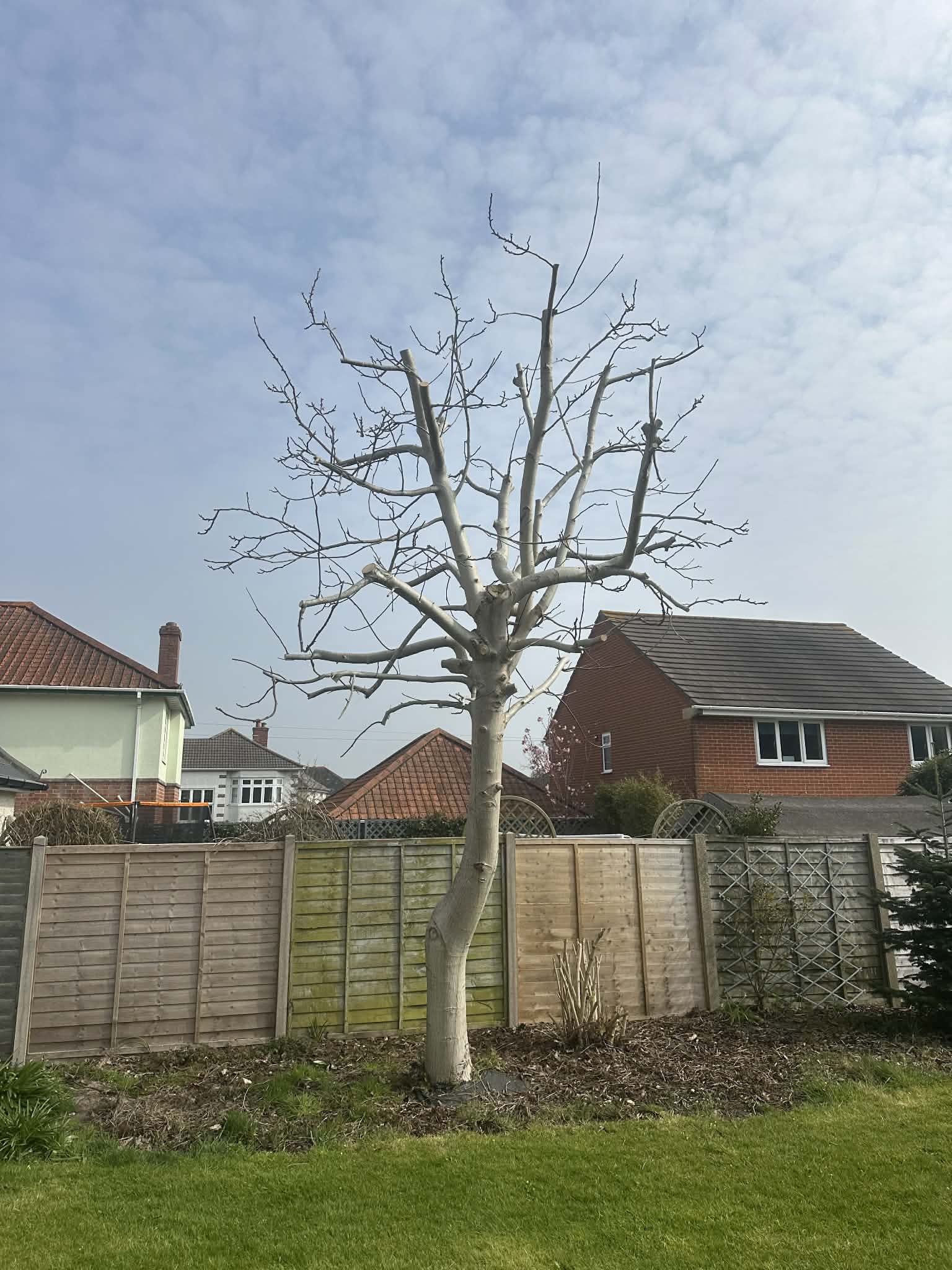
"Large holm oak in our garden — Clearcut assessed the structure before recommending the reduction amount. The result looks completely natural, not butchered. They clearly knew what they were doing and the garden looks much better for it."
Professional Tree Surgery — Dorset & Hampshire
Crown
Reduction
NPTC qualified crown reduction across Dorset and Hampshire. Structural assessment before every job. No guesswork, no percentage-based cutting — every reduction planned around the individual tree's architecture to BS3998. Free no-obligation quotes.
to this standard
experience
insured
qualified
The service explained
What is Crown
Reduction?
Crown reduction is the reduction of a tree's overall canopy size — its height, spread or both — by shortening selected branches back to appropriate growing points within the canopy. When carried out correctly to BS3998 (Recommendations for Tree Work), it reduces the tree's physical presence while preserving its natural shape and long-term structural integrity.
What crown reduction is not
Crown reduction is fundamentally different from topping — the indiscriminate removal of the top of a tree without regard to structure, cutting through stems and branches at arbitrary heights. Topping is widely condemned by arboricultural bodies because it leaves large, poorly callused wounds that invite decay, creates structurally weak regrowth, and often leaves a tree in a worse condition than before. Clearcut Tree Surgery does not carry out topping under any circumstances. If you've been quoted for "tree topping" by another company, we'd recommend asking them to explain how that differs from crown reduction and what standard they work to.
How we approach crown reduction
Before any crown reduction begins, we assess the individual tree's structure — its species, growth pattern, health status, existing wound responses, dominant scaffold branches and the relationship between the crown and the root system. The amount of reduction recommended is the minimum needed to achieve the objective. Over-reducing a tree creates stress responses that lead to dense, rapid regrowth, which accelerates the need for repeat work.
We do not apply a standard percentage reduction across all trees. A 20% reduction of the canopy means different things on a willow and an oak, and what constitutes an appropriate reduction point differs significantly between species. We work to the individual tree, not to a formula.
When crown reduction is appropriate
Crown reduction is the right operation when a tree has outgrown its position, is causing shading, contact with structures or infrastructure, or poses a wind-loading risk that can be meaningfully reduced by reducing the canopy's sail area. It is not the appropriate response to every concern about a tree — we advise honestly at the site visit about whether reduction will achieve the objective or whether a different operation would be more appropriate.
Crown reduction on trees with a TPO requires consent from BCP Council, Dorset Council or the relevant National Park Authority before work can begin. Trees in Conservation Areas require six weeks written notification. We check and manage all planning requirements at the site visit — do not begin work without checking consent requirements.
How it works
Our Crown Reduction
Process
Site Visit & Assessment
Free no-obligation visit to assess the tree's species, structure, health and the specific objective. We identify any TPO or Conservation Area constraints before quoting. You receive a clear written quote with the recommended work specified.
Planning Consent
Where the tree has a TPO or sits in a Conservation Area, we manage the application or notification with the relevant authority — BCP Council, Dorset Council or the National Park Authority. We advise on timelines at the quote stage.
Structural Crown Work
Our NPTC qualified arborists carry out the reduction to the agreed specification — cutting back to appropriate growing points within the canopy, maintaining natural form, leaving no stubs. All work to BS3998.
Site Clearance
All arisings — branches, foliage and woodchip — cleared and removed from site. The area is left clean and tidy. We advise on likely regrowth timelines and recommended maintenance intervals at completion.
Species-specific guidance
Crown Reduction by
Species
Different species respond differently to crown reduction. This is why a blanket percentage approach is inadequate — the appropriate reduction amount and timing varies significantly between trees.
Oak (Quercus)
Oaks generally respond well to modest crown reduction when carried out at appropriate growing points. The key is reducing to lateral branches of sufficient diameter — heavy heading cuts on oak produce dense epicormic growth and entry points for decay. Maximum reduction typically 20–25%.
Beech (Fagus)
Beech responds well to crown reduction when the tree is healthy. Beech dislikes large wound exposure — reductions should target the crown's periphery rather than large internal cuts. Over-reduction creates dense, shading growth that can permanently alter the crown's character.
Ash (Fraxinus)
Ash dieback (Hymenoscyphus fraxineus) is now widespread across Dorset and Hampshire. All ash must be structurally assessed before climbing or reduction work. Ash with significant dieback is structurally unpredictable — reduction method is planned around the individual tree's condition.
Sycamore (Acer pseudoplatanus)
Sycamore is a vigorous species that responds well to crown reduction and will produce significant regrowth within two to three years. This makes it tolerant of larger reductions than oak, but also means repeat management is frequently needed. Best reduced in the dormant season.
Lime (Tilia)
Limes respond readily to crown reduction and produce vigorous basal and epicormic growth. Epicormic growth on the stem and main scaffold branches is a characteristic response — this is normal and can be managed. Regular maintenance every three to five years is typical for managed limes.
Cherry & Plum (Prunus)
Prunus species are susceptible to silver leaf disease through large pruning wounds. Crown reduction should be carried out in dry conditions during summer when the risk of silver leaf infection is lower. Large wounds on cherry should be minimised. Spring pruning of Prunus carries significant silver leaf risk.
Pine (Pinus)
Most pine species do not produce new growth from old wood and cannot be reduced in the conventional sense — cuts into old wood produce dead stubs rather than lateral growth. Crown reduction of pine is limited to removing complete branches back to the main stem or removing the leading shoot. We advise on appropriate management at the site visit.
Veteran & Ancient Trees
Veteran and ancient trees require a different approach to crown management — often less intervention, not more. The objective for veteran trees is typically to extend safe useful life, which may mean targeted deadwood removal rather than crown reduction. We advise on the appropriate strategy at the site visit.
Cypress & Cupressus
Leyland and other cypress species respond to crown reduction and lateral shaping, provided cuts are made into green wood. Cutting into brown, non-photosynthetic wood produces dead patches. Topped Leylandii will not recover the apex — we advise on realistic outcomes before work begins.
Our work
Crown Reduction Results


Customer reviews
"Oak with a TPO in our Wimborne garden — Clearcut submitted the Dorset Council application, managed the process and did the crown reduction once consent came through. Professional from first call to site clearance."
"Asked them to reduce a beech that another company had quoted to top. Clearcut explained exactly why topping is harmful, did a proper crown reduction and the tree looks excellent. There's a clear difference between companies that know what they're doing and those that don't."
Common questions
Crown Reduction
— Your Questions
Call 01202 022560 for a straight answer or to book a free no-obligation site visit anywhere in Dorset or Hampshire.
Where we work
Crown Reduction Across Dorset & Hampshire
Free Crown
Reduction
Quote
We visit your property across Dorset and Hampshire — assess the tree, check all planning requirements and provide a clear written quote specifying the exact work to be done. No obligation, no hidden costs.
01202 022560Or WhatsApp us · Email us
Request a Free Quote
Tell us about your trees and we'll respond within 24 hours.