
Crown lifting Bournemouth, Poole & Dorset
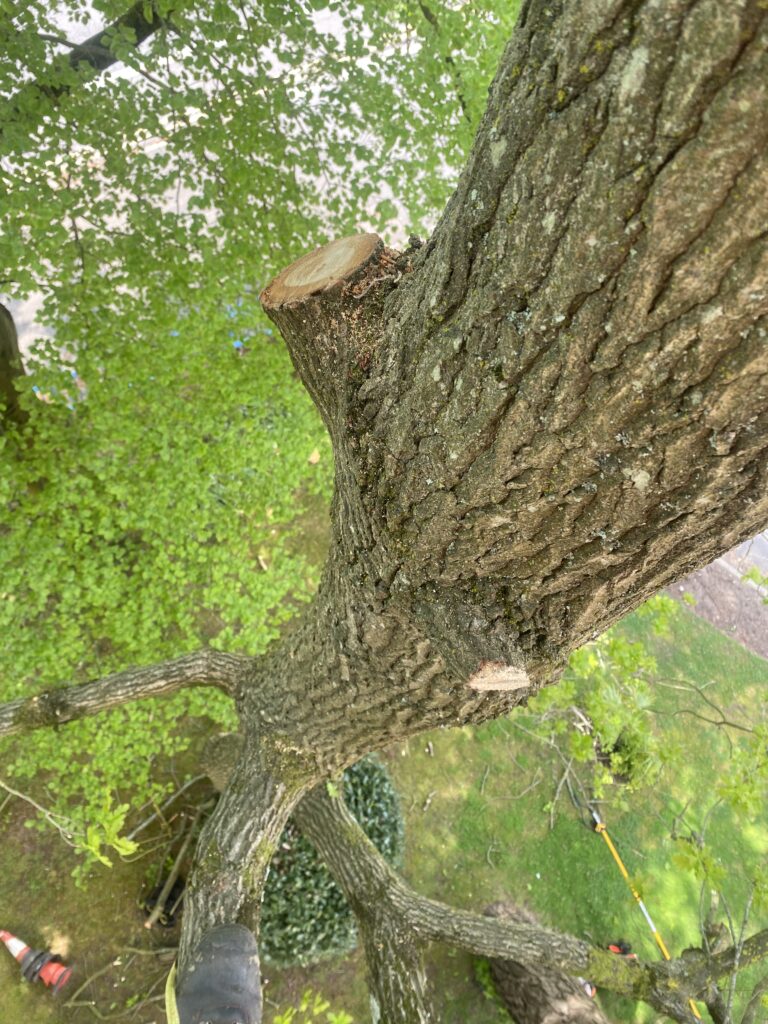
Low branches in the way? Crown lifting removes the lowest branches to raise the base of the crown, giving you headroom and light underneath without taking anything off the top of the tree.
Next free quote visits, live from our diary
- 5.0 on Google, 50+ reviews
- NPTC, City & Guilds & Lantra
- £5M insured
Crown lifting in short
Crown lifting is the removal of a tree's lowest branches to raise the height of the crown above the ground. It is used to clear lawns, paths, drives, roads and buildings, and to let more light into the garden under the tree. The height and spread of the tree stay the same. It is specified as the clearance you want, for example "lift to 3 m over the lawn".
- Typical clearance
- 2.5 m over lawns and paths, about 5.2 m over roads for lorries
- Standard
- Cuts to BS3998, no more than the tree can take at once
- Good for
- Walkways, drives, parking, mowing, views and light
- Permission
- Needed for TPO trees and in conservation areas
- Combine with
- Crown reduction or thinning
Why lift a crown?
Lifting is one of the gentlest kinds of tree work, and one of the most useful.
Branches that hang low over a path catch people's heads, scrape vans and block the mower. Over a road or pavement they can be a legal problem: the owner has to keep the highway clear. And under a heavy, low crown, nothing grows.
Lifting takes off just those lowest branches, cut back cleanly to the trunk or to a larger branch. On young trees we lift gradually over a few years so the tree keeps enough leaf to grow well. On mature trees we avoid cutting very large lower limbs, which leave big wounds; sometimes a partial lift or a reduction of those limbs is better.
Crown lifting questions
Anything not covered here? Ask us and we'll give you a straight answer.
How high should a tree be lifted?
Does crown lifting harm the tree?
Can I lift the branches of my neighbour's tree?
Will crown lifting let more light into my garden?
Do I need permission?
Do we cover you?
Based in Ferndown, covering all of Dorset, all of Hampshire and parts of Wiltshire.
Check your postcode
Five stars, every time
What customers across Dorset and Hampshire say after the job is done.


Tree down? Call now.
Storm damage, fallen trees and dangerous limbs. Fast response across Dorset and Hampshire, 24 hours a day, 365 days a year.
Book your free quote visit
Choose the job, pick a time from our live diary and tell us where. No payment and no obligation.
- You pick a timeOnline, in about a minute. Visits run Monday to Thursday and Saturdays.
- We visit and look properlyA qualified arborist checks the trees, the access and whether any consent is needed.
- You get a written quoteA clear, fixed price with no hidden costs. The price quoted is the price you pay.
- NPTC
- City & Guilds
- Lantra
- £5M insured
- BS3998
Want to ask something first? Send us a message and we reply within 24 hours.
Contact usTree down or dangerous? Call 01202 022560, 24 hours a day.
Book a free quote visit
Free No obligation About a minute
- 1The job
- 2Day and time
- 3Your details
What would you like?
Type of work tick all that apply
Pick at least one, so we turn up with the right kit.
Not a booking?
Pick a day, then a time. These come straight from our diary.
You're booked in
We've got your quote visit down and we'll see you then. A member of the team will be in touch if we need anything before the visit.
Preview only: nothing was sent. On the live site this goes into your diary exactly as the bookings page does.
Need to rearrange? Call 01202 022560.
Fallen tree, storm damage or a dangerous limb over a road, roof or power line? Don't book a slot. Call us now and we'll get to you fast, day or night, 365 days a year.
01202 022560 Call nowFill this in and we'll reply within 24 hours.
Message sent
Thanks. We reply to every enquiry within 24 hours.
Preview only: nothing was sent. On the live site this posts to your diary script and then goes to your thank-you page.
NPTC, City & Guilds and Lantra qualified. £5M insured. Your details are never shared.